In much of Uttar Pradesh, Bihar, Madhya Pradesh and among Maithil and Bhojpuri families, the tilak is one of the most important days before the wedding. The bride’s brother and male relatives travel to the groom’s house with gifts, fruit and the tilak thaal, apply the tilak on the groom’s forehead and formally accept him into the family. The groom’s side hosts the evening, so the guest list is theirs: neighbours, relatives, colleagues of the father and the whole mohalla, followed by a preetibhoj. Some families call it sagan or phaldan, and a few combine it with mangal geet by the women of the house.
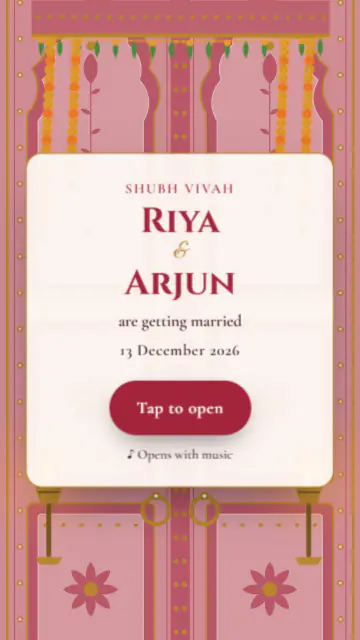
A tilak invitation is traditionally written in formal Hindi, and many families still want that tone even on WhatsApp. This free page starts with “॥ श्री गणेशाय नमः ॥” and lets you write the welcome in your own words, with the ceremony and the preetibhoj as separate items, each with its time and a Google Maps button. Guests reply with how many people are coming, which matters when the halwai needs a count, and you can print a QR code on the paper card for the older relatives.
What your guests get
- Tilak ceremony and preetibhoj as separate items
- Formal Hindi wording you can edit freely
- Map to the house or the banquet hall
- Headcount for the caterer, downloadable as Excel
- A QR code to print on the traditional card